
Call sentiment outcome analysis: How businesses connect customer emotion with resolution, escalation, and repeat calls in 2026
Call Sentiment Outcome Analysis
A customer can sound frustrated throughout a support call and still leave with the problem fully resolved. Another customer can remain polite, thank the agent, and call again the next morning because the original issue was never fixed. If a company looks only at sentiment, those two interactions can easily be interpreted in the wrong way.
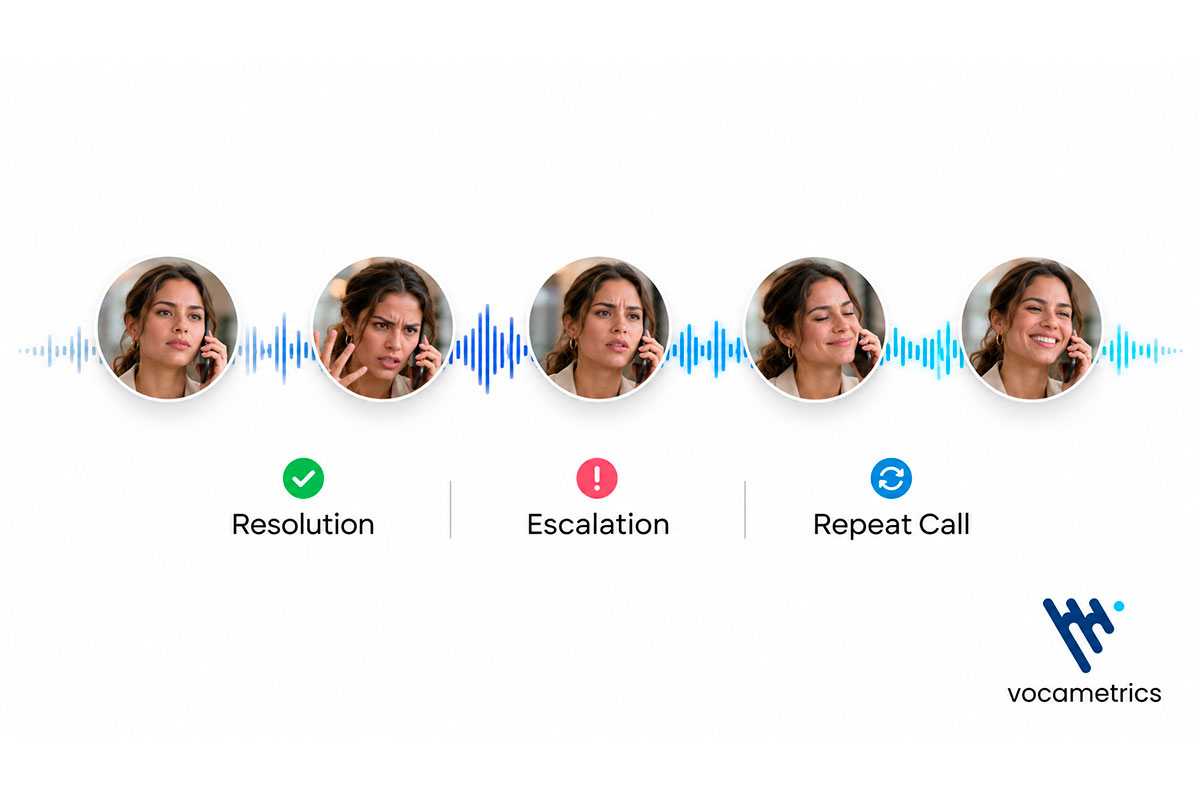
Call Sentiment Outcome Analysis examines the relationship between how a customer feels during a conversation and what actually happens as a result of that interaction. It connects emotional signals with resolution, escalation, transfers, repeat contact, and other outcomes that help businesses understand whether the call truly succeeded.
This distinction matters in 2026 because organizations increasingly have access to transcripts, sentiment signals, summaries, and structured call data. The challenge is no longer detecting whether a conversation appears positive or negative. The more useful question is whether that emotional state corresponds with a successful business outcome.
What is call sentiment outcome analysis?
Call Sentiment Outcome Analysis is the process of evaluating customer sentiment alongside the operational result of a conversation. Instead of treating sentiment as the final conclusion, businesses use it as one signal within a broader analysis of what happened before, during, and after the call.
Sentiment describes the emotional tone or perception detected in the interaction. Resolution indicates whether the customer’s underlying need was addressed. Outcome describes the broader result, which can include escalation, transfer, callback, repeat contact, cancellation, successful completion, or another measurable consequence.
This framework creates a more accurate view of customer interactions because emotion and resolution do not always move in the same direction. A negative caller can receive an effective solution, while a positive caller can leave with an unresolved issue.
Tú podrías estar interesado...
Marcación interna directa permite a las empresas asignar varios números de teléfono a un único sistema PBX, lo que permite a los clientes contactar directamente con empleados o departamentos específicos. Cuando se realiza una llamada a un número DID, la PBX la enruta a la extensión designada sin requerir la intervención de una recepcionista.
Este sistema se integra con tecnologías VoIP y basadas en la nube, ofreciendo funciones avanzadas como desvío de llamadas, correo de voz a correo electrónico y análisis en tiempo real. Las empresas también pueden configurar reglas de enrutamiento de llamadas para garantizar que las consultas de los clientes se dirijan a los equipos adecuados, mejorando la eficiencia general de la respuesta.
Why sentiment alone cannot tell if a call was successful
Sentiment analysis is useful because it helps teams identify emotional patterns at scale. It can show where customers sound frustrated, confused, satisfied, or neutral, but those signals become misleading when organizations interpret them as direct proof of success or failure.
A customer can remain irritated even after the agent solves the issue because the original problem caused financial loss, wasted time, or repeated inconvenience. The emotional tone may stay negative while the operational outcome is successful.
The opposite is equally important. Some customers remain courteous even when the solution is incomplete. A positive closing phrase such as “thank you” may describe the customer’s communication style rather than confirming that the original need was actually resolved.
Customer sentiment vs. call resolution: What is the difference?
Customer sentiment and call resolution answer different questions. Sentiment asks how the customer appears to feel during the interaction. Resolution asks whether the issue that motivated the call was actually addressed.
A business can therefore have four broad combinations: positive sentiment with resolution, positive sentiment without resolution, negative sentiment with resolution, and negative sentiment without resolution. Each combination deserves a different operational interpretation.
The value of Call Sentiment Outcome Analysis comes from examining those relationships instead of ranking calls solely by emotional score. A company gains a clearer understanding of service quality when it distinguishes the customer’s emotional state from the actual result of the interaction.

What negative sentiment with successful resolution really means
Negative sentiment should never automatically be interpreted as poor agent performance. The customer may have entered the conversation already frustrated by an event that occurred before the agent answered the phone.
Three common situations can produce negative sentiment even when the interaction ends with a valid resolution:
Pre-existing frustration: the customer begins the call upset because of a billing error, outage, delay, or previous unsuccessful interaction.
Business constraints: the issue is handled correctly, but the customer remains dissatisfied with a policy, fee, limitation, or contractual condition.
Complex resolution: the problem is solved, although the required process takes longer or involves more steps than the customer wanted.
A supervisor who evaluates these calls only through sentiment could unfairly classify a successful interaction as poor. The correct analysis requires reviewing whether the agent identified the issue, applied the appropriate solution, communicated clearly, and completed the required process.

When positive sentiment hides a failed resolution
Positive sentiment can create the opposite problem. A friendly interaction can look successful even when the business outcome is weak.
Imagine a customer calling about an account configuration issue. The agent provides instructions, the customer responds positively, and the conversation ends politely. Several hours later, the customer discovers that the configuration still does not work and contacts the company again.
The first call may have received a positive emotional classification, but the repeat contact reveals that the outcome was incomplete. This is why businesses should avoid using customer tone as a substitute for evidence that the issue was actually resolved.
How repeat calls validate conversation outcomes
Repeat contact can provide important evidence about whether an earlier interaction achieved its intended result. When a customer contacts the company again about the same issue, the previous resolution may deserve review.
A repeat call does not automatically prove that the first agent made a mistake. The problem may have returned, the customer may have misunderstood instructions, or an external process may have failed after the conversation ended.
The analytical value comes from connecting the interactions. If supposedly resolved calls frequently generate additional contacts about the same topic, the organization may have a process, communication, or resolution-quality problem that a sentiment score would never reveal by itself.
How sentiment and escalation patterns reveal high-risk calls
Escalation also needs context. Some calls escalate because the customer is highly frustrated, while others require escalation because the issue is complex, regulated, financially significant, or outside the first agent’s authority.
Three combinations illustrate why sentiment and escalation should be interpreted together:
Negative sentiment + escalation + resolution: a difficult interaction required additional support but ultimately reached a successful outcome.
Negative sentiment + escalation + repeat contact: the case deserves deeper review because the escalation may not have fully solved the issue.
Neutral sentiment + escalation: the customer remained stable emotionally, but the issue still required a higher level of expertise or authorization.
These combinations help teams separate emotional difficulty from operational complexity. The presence of an escalation does not automatically mean the interaction failed, just as the absence of one does not prove the issue was handled correctly.
Sentiment recovery vs actual resolution
Sentiment recovery occurs when the customer’s emotional state improves during the call. A frustrated caller may become calmer after the agent acknowledges the problem, provides a clear explanation, or takes ownership of the next step.
That improvement is valuable, but it answers a different question from resolution. A customer can feel better because the conversation was handled professionally while the underlying technical or operational problem remains unresolved.
This distinction is especially important for organizations that already track sentiment changes throughout the call. Sentiment recovery describes the emotional trajectory; resolution describes whether the original need was actually completed.
How Vocametrics adds context to sentiment analysis
This is where Vocametrics can contribute more value than a simple positive-or-negative label. By bringing together elements such as transcription, sentiment, conversation summaries, topics, and structured analysis, teams can investigate why a customer reacted in a certain way and what happened around that moment.
The objective is to move beyond the question “Was this call negative?” and examine the complete interaction. A supervisor can review what the customer was discussing, what response the agent provided, how sentiment evolved, and whether the conversation itself shows evidence of a resolution or unresolved concern.
Operational data such as repeat contact, CRM outcomes, or post-call escalation may exist outside the conversation analysis layer, so businesses should combine those sources carefully rather than assuming every outcome is automatically available inside the same platform.
How to measure sentiment alongside call outcomes
A useful analysis combines emotional signals with operational evidence. The goal is not to create more metrics for a dashboard, but to understand how the metrics relate to one another.
Three dimensions are particularly important:
Resolution: whether the customer’s primary need was solved during the interaction.
Escalation: whether the issue required additional authority, expertise, or intervention.
Repeat contact: whether the customer contacted the business again about the same issue after the original call.
These dimensions help organizations evaluate whether sentiment accurately reflects the business outcome. They also make it easier to identify calls that deserve manual review because the emotional signal and operational result point in different directions.

How call sentiment outcome analysis improves agent evaluation
Agent performance can be misinterpreted when sentiment is used without context. A representative who frequently handles difficult billing disputes may receive more negative conversations than an agent handling routine appointment confirmations, even when both are performing their responsibilities correctly.
Call Sentiment Outcome Analysis helps supervisors distinguish customer emotion from agent effectiveness. A call that begins negatively and ends with a confirmed resolution may provide evidence of strong handling rather than poor service.
This also improves coaching quality. Instead of telling an agent to “create more positive sentiment,” a manager can examine whether the agent communicates clearly, resolves issues, avoids unnecessary escalation, and reduces repeat contact.
From sentiment scores to meaningful conversation outcomes
Customer sentiment remains an important source of information, but it becomes more useful when organizations connect it with what actually happened during and after the interaction.
Call Sentiment Outcome Analysis provides a framework for making that connection. It helps businesses understand whether negative sentiment reflects a real service failure, whether positive sentiment hides an unresolved issue, and whether escalation or repeat contact changes the interpretation of the original conversation.
Vocametrics can support this analysis by helping teams structure the conversational side of the evidence. When combined with reliable operational data, organizations can move from measuring how a call felt to understanding whether the interaction actually worked.
FAQS
Sentiment adds emotional context to First Contact Resolution but should not replace it. A customer can have a negative experience while still receiving a successful first-contact solution, or a positive interaction while needing to contact the company again.
Sentiment describes how the customer appears to feel during the conversation. Call resolution describes whether the issue that caused the customer to contact the business was actually solved.
Yes. Customers may remain polite or express appreciation even when the underlying issue continues. Repeat contact, reopened cases, or later escalation can reveal that a conversation classified as positive did not produce a durable resolution.
No. A customer may remain frustrated even when the agent correctly solves the problem. Negative sentiment can reflect the original issue, a business policy, a previous experience, or the complexity of the situation rather than poor service during the current call.
Call Sentiment Outcome Analysis is the process of evaluating customer sentiment together with the operational result of a conversation. It connects emotional signals with factors such as resolution, escalation, repeat contact, and other outcomes that help determine whether the interaction succeeded.
SÍGUENOS EN YOUTUBE
Tú podrías estar interesado...
Call Sentiment Outcome Analysis A customer can sound frustrated throughout …
Law firm client intake PBX A potential client may spend …
AI Voice of Customer Analysis Companies spend significant resources on …
Contact Center Call Abandonment A customer calls because they need …
 ES
 EN