
Click to Call Conversion: Turn Visitors Into Phone Leads in 2026
Click to Call Conversion
Businesses invest heavily in SEO, paid search, content, landing pages, and conversion-focused website design to attract qualified visitors. Yet traffic alone does not guarantee revenue. A user may arrive with clear purchase intent, compare several options, review pricing, and still leave without speaking to anyone because the path from website visit to phone conversation requires too many steps.
That gap is where Website Click-to-Call Conversion becomes commercially relevant. The goal is not simply to place a phone icon on a website. It is to reduce friction at the precise moment when a visitor is ready to move from research into a direct conversation with sales, support, or another business team.
The timing matters in 2026 because phone calls remain important even as AI search and digital self-service continue to expand. Infinity reported that, across 41 million tracked calls, visit-to-call rates increased 31% between January 2025 and June 2026, while total call volume grew 24% year over year during the first half of 2026. Its data suggests that many callers are arriving after doing more research and are using the phone later in the decision process.
What is Website Click to Call Conversion?
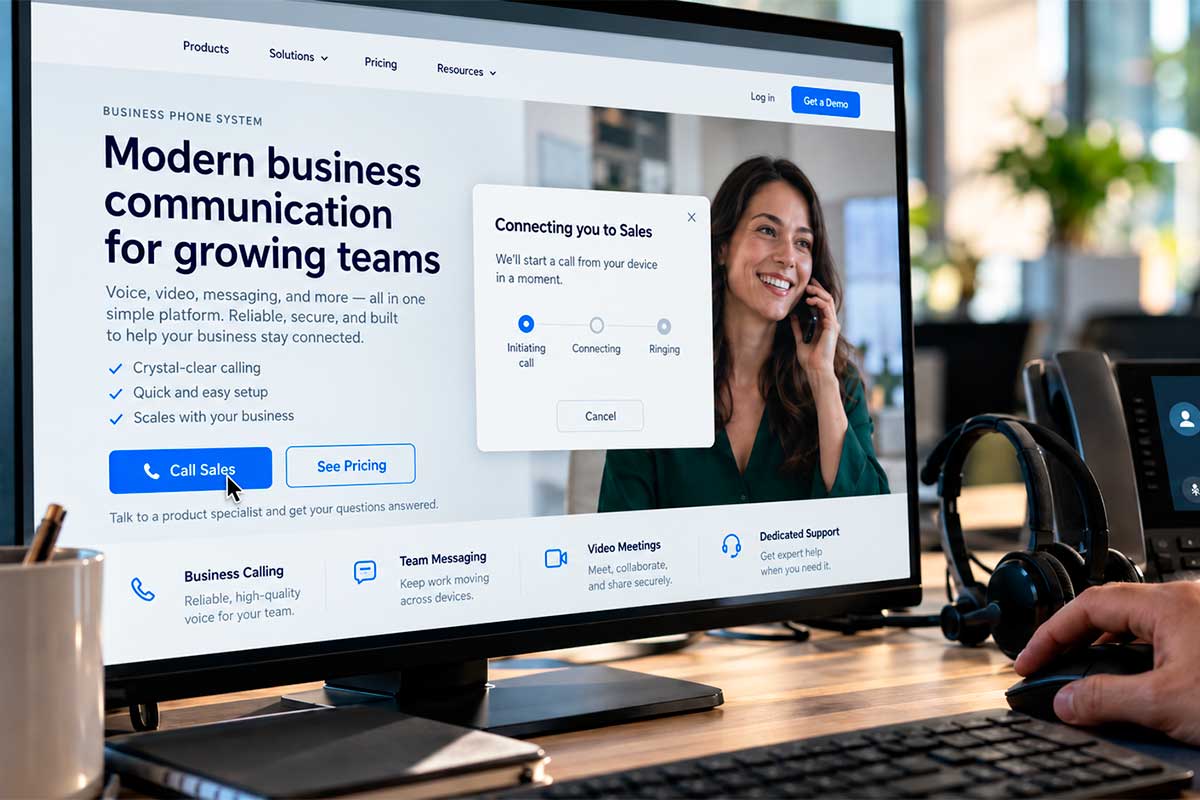
Website Botón de llamada Conversion is the process of turning a website visitor into an initiated phone conversation through a direct call action embedded within the digital experience. It usually involves a clickable phone number, button, or interface element that reduces the number of steps between browsing and speaking with the business.
The conversion concept is important because a click itself is not the final business outcome. A user may tap the call button, fail to connect, reach the wrong department, abandon the call, or speak with someone who cannot resolve the request. Effective Click-to-Call optimization therefore considers both the digital trigger and what happens after the connection attempt.
Salesforce describes click-to-call as a feature that lets users initiate a call directly from a website, app, or digital ad, eliminating the need to search for a number and enter it manually. Its 2026 guidance positions the feature specifically as a way to reduce friction between digital interest and a live representative.
Tú podrías estar interesado...
Marcación interna directa permite a las empresas asignar varios números de teléfono a un único sistema PBX, lo que permite a los clientes contactar directamente con empleados o departamentos específicos. Cuando se realiza una llamada a un número DID, la PBX la enruta a la extensión designada sin requerir la intervención de una recepcionista.
Este sistema se integra con tecnologías VoIP y basadas en la nube, ofreciendo funciones avanzadas como desvío de llamadas, correo de voz a correo electrónico y análisis en tiempo real. Las empresas también pueden configurar reglas de enrutamiento de llamadas para garantizar que las consultas de los clientes se dirijan a los equipos adecuados, mejorando la eficiencia general de la respuesta.
Why website traffic does not always become phone leads
Traffic acquisition and conversion are separate challenges. A landing page may rank well, receive strong paid traffic, and attract visitors with genuine interest while still generating fewer conversations than expected because the final contact step is poorly designed.
Consider a prospect evaluating a business communication platform. The visitor has already reviewed features, compared providers, and reached the pricing section. If the next step requires finding a contact page, copying a number, opening another application, and navigating an IVR, some of that existing purchase intent can disappear before a sales conversation begins.
The problem becomes more important with high-intent traffic. Infinity’s 2026 analysis found that PPC visitors generated calls at a higher rate than organic visitors in its tracked dataset, while the quality of those conversations remained comparable based on call duration. This reinforces the need to measure phone behavior as part of digital conversion rather than treating calls as an unrelated offline event.
How Click to Call reduces friction for high-intent visitors
High-intent visitors are users whose behavior indicates that they may be approaching a decision. They may be reviewing service details, comparing plans, checking availability, looking at implementation requirements, or attempting to resolve a specific concern before taking action.
A well-placed Click to call action shortens the path between that intent and a live conversation. The technology does not create purchase intent by itself; it helps capture intent that already exists and makes it easier for the user to act while the need is still immediate.
Salesforce’s current explanation of click-to-call follows the same principle: direct call access removes steps such as locating a general number and manually dialing it. The value comes from reducing interruptions in the buying journey, particularly when the visitor already has a specific question that requires human clarification.
Where Click to Call works best on a business website
Not every page needs the same phone CTA. A visitor reading an educational article at the beginning of the research process behaves differently from someone reviewing pricing, requesting implementation details, or trying to reach a support team.
The strongest placement decisions usually correspond with pages where intent is already more explicit:
- Service and pricing pages: visitors are evaluating a solution and may need clarification about cost, implementation, scope, or availability.
- High-intent landing pages: users arriving through SEO or advertising may already have a defined commercial need and want a faster path to a representative.
- Support and contact pages: customers seeking immediate help benefit from a direct route into the appropriate service team.
The placement itself should reflect page purpose. A prominent call action may work well on a mobile pricing page, while an informational resource can use a less intrusive CTA that appears only after the visitor has enough context to understand why a conversation may help.
Click-to-Call for sales, customer service, and appointments
A website-generated call should reach the team best positioned to handle the visitor’s intent. Sending every Click-to-Call interaction toward the same general queue can reduce the value of the conversion because sales, customer service, and appointment requests require different handling.
Three common scenarios illustrate why routing matters:
- Sales: high-intent visitors can move directly from service evaluation into a conversation with a commercial team.
- Customer service: users with an active problem can reach a support workflow without searching for another communication channel.
- Appointments or consultations: prospects can move from online research into a live conversation that helps confirm availability or next steps.
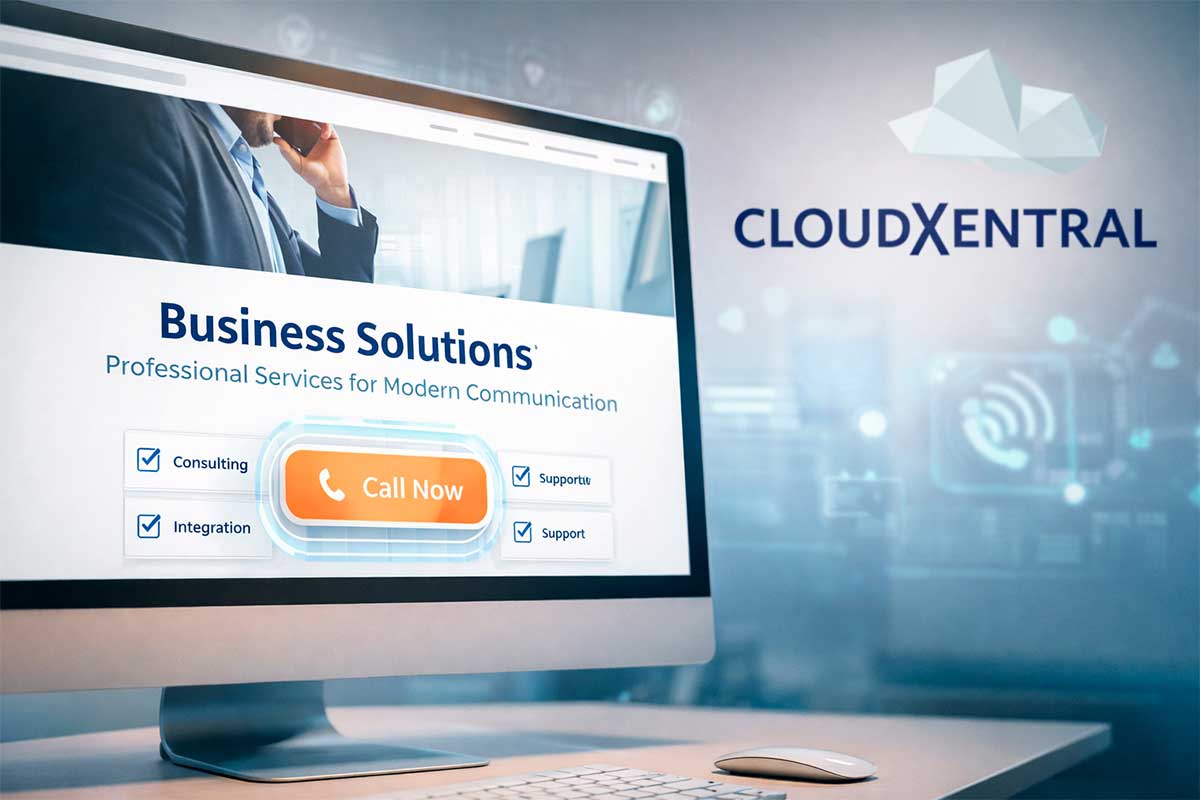
CloudXentral’s Click2Call service is designed around this transition from website interaction to direct business communication. Its current service page describes web-based HTML integration that allows visitors to initiate calls directly and connects that functionality with Newcom Inc’s communications infrastructure.

Website Click to Call Conversion should be measured beyond the click
A click on the phone button is useful, but it does not prove that the interaction created business value. Companies need to understand what happens after the user initiates the action and whether the call ultimately produces a meaningful outcome.
A page could generate a high volume of clicks while producing poor results if calls go unanswered, reach the wrong department, or create long waiting times. This is why Click-to-Call should be evaluated as part of the broader conversion journey rather than as a standalone UI interaction.
The most useful measurement framework includes three levels:
- Click-to-call conversion rate: the percentage of relevant visitors who initiate the call action.
- Connected call rate: the proportion of initiated calls that successfully reach the intended business destination.
- Business outcome: qualified leads, appointments, sales opportunities, customer resolutions, or other measurable results generated from those conversations.
This distinction helps marketing and operations teams identify where conversion problems actually occur. A low click rate may indicate poor placement or weak intent, while a strong click rate combined with low connected calls may indicate an operational problem after the digital conversion has already succeeded.
How Click2Call connects website leads with business communications
CloudXentral’s Click2Call can be positioned as the bridge between digital demand generation and the communication environment that receives the call. A user arrives through SEO, paid search, a campaign, or direct traffic; the website captures that intent; the call action moves the visitor into a live conversation.
CloudXentral states that its Click2Call service can be embedded into websites through HTML integration and allows visitors to initiate IP-based calls directly. The platform is presented as part of the broader communications ecosystem built by Newcom Inc, which gives the implementation a natural connection with business telephony rather than treating the button as an isolated marketing widget. Cloudxentral.com
The stronger commercial argument is not that a button exists. It is that the transition from digital intent to human contact can be connected to a structured communications environment where routing, PBX, extensions, or Contact Center workflows can manage what happens after the visitor decides to call.
How Website Click-to-Call Conversion connects with SEO
SEO generates visibility, but visibility becomes commercially valuable only when the user can take an appropriate next step. Click-to-Call can support that transition for searches where the user eventually needs a conversation rather than another page of information.
It is important to separate SEO performance from conversion performance. Adding a phone button does not directly improve organic rankings. The relationship is that SEO can bring a qualified visitor to the website, while Click-to-Call can reduce friction when that visitor reaches the point where a live conversation is the most useful next action.
This becomes particularly relevant as AI-assisted research changes how users arrive at websites. Infinity’s 2026 dataset found that phone calls increasingly occur later in an already informed buying journey, and AI-referred callers in its tracked sample showed strong engagement characteristics. That suggests businesses should pay closer attention to the transition from digital research to offline conversation.

Turning digital intent into qualified phone conversations
The strongest Website Click-to-Call Conversion strategy starts by understanding where visitors are most likely to need human assistance. Businesses should identify the pages, campaigns, devices, and user journeys where a live conversation can remove uncertainty or accelerate a decision.
La Click to call service offered through CloudXentral can support that transition by allowing businesses to integrate direct calling into their website and connect the resulting interaction with their communications environment. CloudXentral and Newcom Inc are therefore most relevant at the point where digital marketing and enterprise telephony meet. Cloudxentral.com
The objective is not to generate as many calls as possible. A better objective is to make it easier for the right visitors to reach the right team when a conversation is the most efficient next step, then measure whether those conversations produce outcomes that justify the traffic and marketing investment that generated them.
FAQS
Businesses should track more than button clicks. Useful measurements include the percentage of visitors who initiate a call, how many calls actually connect, and how many result in qualified leads, appointments, sales, or successful service outcomes.
Yes. Mobile devices are particularly suited to Click-to-Call because a tel: link can open the phone dialer directly. Businesses should still test the experience across devices and confirm that the call action is clear, functional, and connected to the right destination.
The strongest placements are usually pages where visitors show higher commercial or service intent, such as pricing, service, support, contact, and campaign landing pages. Placement should be based on user behavior rather than adding an identical call button to every page.
Click-to-Call can reduce friction and make it easier for high-intent users to contact a company, which can support lead generation. The actual result depends on traffic quality, CTA placement, mobile and desktop usability, routing, response time, and whether the receiving team can handle the conversation effectively.
SÍGUENOS EN YOUTUBE
Tú podrías estar interesado...
Contact Center Call Abandonment A customer calls because they need …
Click to Call Conversion Businesses invest heavily in SEO, paid …
Contact Center Workforce Forecasting A company can have enough customer …
Virtual PBX Business Continuity Business messaging in the United States …
 ES
ES  EN
EN
Un comentario