
Business Phone Service Providers in USA | How to Choose the Right Business Communication Partner
Business Phone Service Providers in USA
When companies begin evaluating business phone service providers in USA, they often focus on the wrong factors. Most online comparisons revolve around pricing, number of users, or promotional offers. While these aspects matter, they rarely determine whether a communication platform will support a company’s long-term growth.
The reality is that business communications have changed dramatically over the last decade. Hybrid workforces, cloud infrastructure, AI-powered analytics, and customer experience expectations have transformed what organizations need from a telecommunications provider.
Instead of asking which provider is the cheapest, business leaders should ask a more important question:
Can this communication platform support my company as it grows over the next five years?
The answer depends on several factors that extend far beyond phone service alone.
The Evolution of Business Communications in the United States
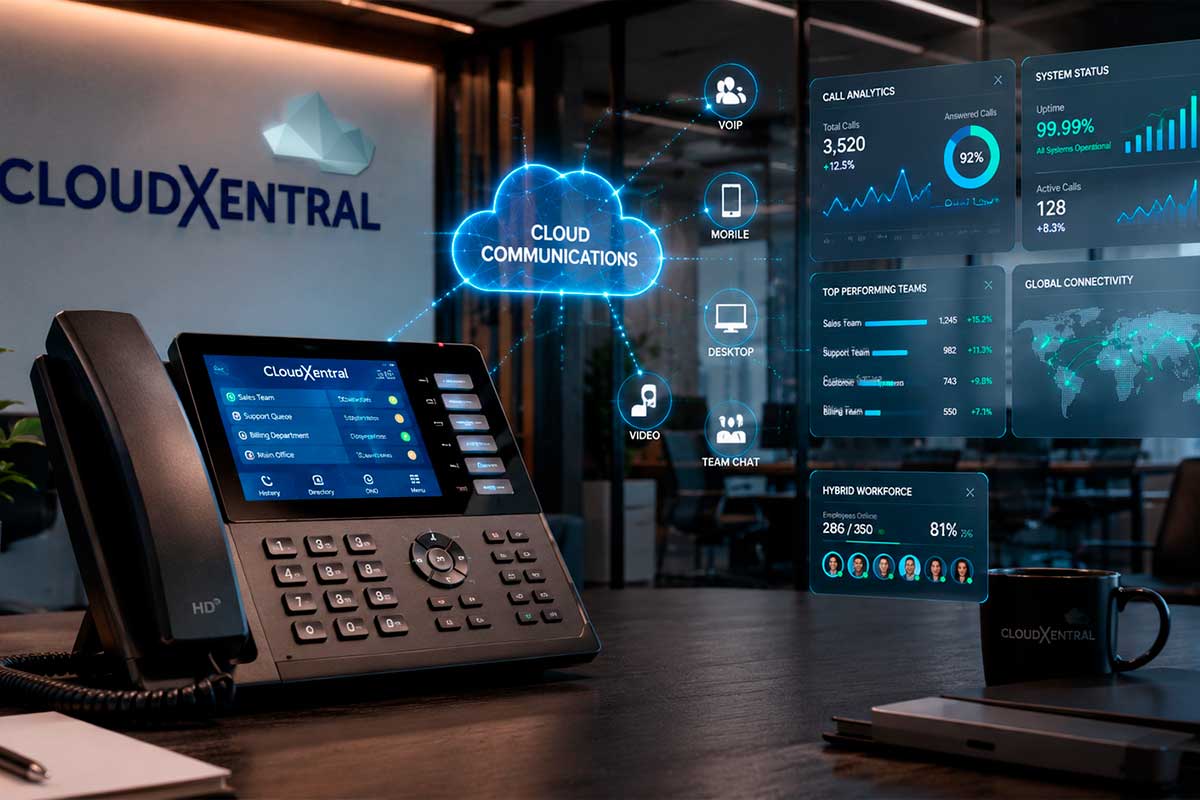
The communications landscape in the United States has undergone a significant transformation. Traditional landlines and on-premise PBX systems once dominated the market. Today, businesses increasingly rely on cloud-based communications, unified collaboration platforms, and intelligent call management tools.
Several trends are driving this shift…
Companies have embraced hybrid and remote work models. Employees are no longer tied to a single office location, which requires communication systems that function seamlessly across multiple devices and locations.
At the same time, businesses are investing heavily in customer experience. Every missed call represents a potential lost opportunity, making communication reliability a critical operational priority.
Artificial intelligence has also entered the telecommunications space. Organizations can now analyze conversations, monitor customer sentiment, and identify performance trends that were previously invisible.
Tú podrías estar interesado...
Marcación interna directa permite a las empresas asignar varios números de teléfono a un único sistema PBX, lo que permite a los clientes contactar directamente con empleados o departamentos específicos. Cuando se realiza una llamada a un número DID, la PBX la enruta a la extensión designada sin requerir la intervención de una recepcionista.
Este sistema se integra con tecnologías VoIP y basadas en la nube, ofreciendo funciones avanzadas como desvío de llamadas, correo de voz a correo electrónico y análisis en tiempo real. Las empresas también pueden configurar reglas de enrutamiento de llamadas para garantizar que las consultas de los clientes se dirijan a los equipos adecuados, mejorando la eficiencia general de la respuesta.
Why Traditional Phone Systems Are Becoming a Limitation
Many companies continue operating with communication systems designed for a business environment that no longer exists. Traditional phone infrastructure often creates operational inefficiencies that become more visible as organizations grow. Physical PBX systems require hardware investments, maintenance contracts, and specialized support. Expanding these systems can become costly and time-consuming.
Businesses also struggle with flexibility. Employees working remotely may need to rely on personal devices or disconnected communication tools, creating an inconsistent customer experience. Another challenge is visibility. Traditional phone systems provide very little insight into how customer interactions are being handled.
Without access to reporting and analytics, managers often make decisions based on assumptions rather than actual communication data. These limitations are one of the primary reasons businesses are migrating toward cloud-based communication solutions.

What Modern Businesses Need From Business Phone Service Providers in USA
The requirements for business communication systems have evolved significantly. Organizations now need platforms capable of supporting growth, mobility, and operational intelligence.
Infrastructure Reliability
A communication platform is only as strong as the network behind it. Businesses should evaluate infrastructure quality, redundancy capabilities, uptime performance, and voice reliability. Service interruptions can directly impact revenue, customer satisfaction, and internal productivity. Reliable communication infrastructure has become a business necessity rather than a technical preference.
Scalability Without Complexity
Growth should not require rebuilding communication systems. Modern organizations need the ability to add users, departments, extensions, and locations quickly without investing in new hardware every time the business expands. This flexibility is one of the primary advantages of cloud-based communication platforms.
Mobility for Hybrid Work Environments
The modern workforce expects flexibility. Communication systems must allow employees to answer calls, access extensions, and collaborate from any location while maintaining a consistent business identity.
This capability is especially important for organizations with distributed teams, field representatives, or multiple offices. Businesses that fail to support mobility often struggle to maintain communication consistency.

Why Virtual PBX Has Become a Core Business Technology
The rise of cloud communications has positioned the virtual pbx as one of the most important technologies in modern business operations.
Unlike traditional PBX systems, a cloud-based platform removes the need for physical infrastructure while providing advanced communication capabilities. A virtual pbx allows organizations to centralize communication management, support remote employees, create intelligent call flows, and maintain professional customer interactions regardless of where employees are located.
This model is particularly valuable for growing businesses that need enterprise-grade functionality without enterprise-level infrastructure costs.
The Growing Importance of VoIP Technology
The migration toward cloud communications has also accelerated adoption of the voip phone model across the United States. Voice over Internet Protocol allows businesses to transmit calls through internet infrastructure rather than traditional phone lines. This shift creates significant operational advantages.
Communication becomes more flexible, scalable, and cost-efficient. Businesses can support multiple locations, remote workers, and mobile employees through a unified communication environment. The transition to VoIP has fundamentally changed what organizations expect from business phone service providers. Companies now evaluate communication platforms based on operational value rather than simple connectivity.

The Rise of Cloud Call Centers
As organizations grow, communication requirements often extend beyond traditional business phone systems. Customer service teams, sales departments, and support operations require more advanced capabilities. This is where the Cloud Call Center model becomes increasingly relevant.
Cloud-based call center environments provide centralized management, workforce flexibility, performance visibility, and scalable customer service operations. Unlike traditional call centers, cloud solutions allow businesses to expand rapidly without significant infrastructure investments. Organizations can support distributed teams while maintaining consistent customer experiences across all communication channels.
Conclusión
The conversation surrounding business phone service providers in USA should extend far beyond pricing and feature lists.
Modern businesses require communication platforms capable of supporting hybrid work, scalability, operational intelligence, and customer experience initiatives.
Organizations that evaluate providers based on long-term business outcomes rather than short-term costs are more likely to build communication infrastructures that support sustainable growth.
As cloud communications, AI analytics, and mobility continue shaping the future of business operations, choosing the right communication partner becomes one of the most important strategic decisions a company can make.
FAQS
Businesses should prioritize infrastructure reliability, scalability, mobility, security, analytics capabilities, and support quality rather than focusing exclusively on pricing.
Cloud platforms provide greater flexibility, support remote work environments, simplify scalability, and reduce the infrastructure costs associated with traditional PBX systems.
Un virtual pbx centralizes communication management, supports remote teams, improves call routing, and allows organizations to expand without investing in additional hardware.
Call analytics helps organizations understand customer interactions, monitor performance, improve service quality, and make more informed operational decisions.
Vocametrics transforms customer conversations into actionable business intelligence by analyzing calls, identifying trends, monitoring sentiment, and helping organizations optimize performance.
SÍGUENOS EN YOUTUBE
Tú podrías estar interesado...
Contact Center Call Abandonment A customer calls because they need …
Click to Call Conversion Businesses invest heavily in SEO, paid …
Contact Center Workforce Forecasting A company can have enough customer …
Virtual PBX Business Continuity Business messaging in the United States …
 ES
ES  EN
EN
3 respuestas